
THE COMPERIO MARKET BRIEF
Monthly Market Commentary
November 2026 Edition
Inflation: When Monetary Policy Meets Its Limits
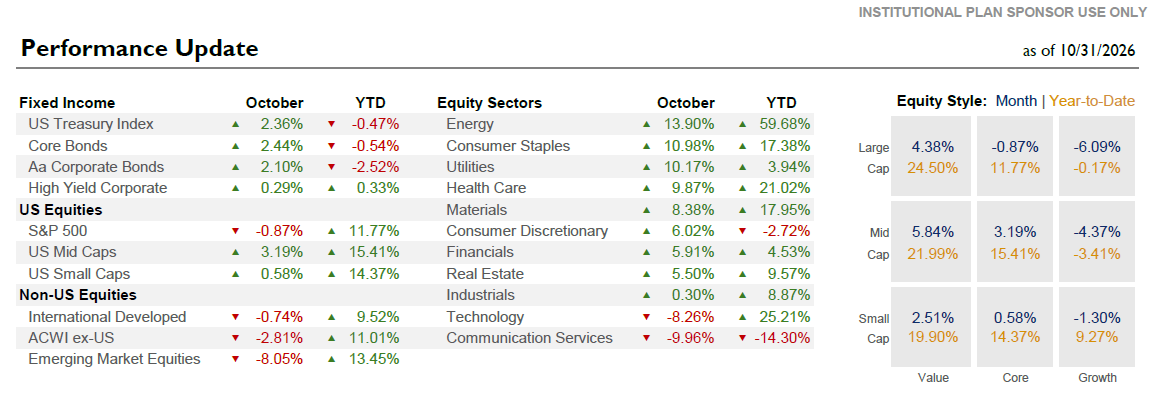
At a Glance
The limits of monetary policy when inflation is driven by supply disruptions
Federal Reserve Chair Kevin Warsh has repeatedly emphasized that the Fed’s responsibility is to return inflation to its 2% target, as measured by the Personal Consumption Expenditures (PCE) price index. His commitment has remained firm despite geopolitical disruptions and supply-related price pressures.
Yet research published by the Federal Reserve Bank of San Francisco raises an important question about the effectiveness of monetary policy. The research finds that higher interest rates significantly reduce demand-driven inflation, but have no statistically significant effect on inflation attributable to supply disruptions.
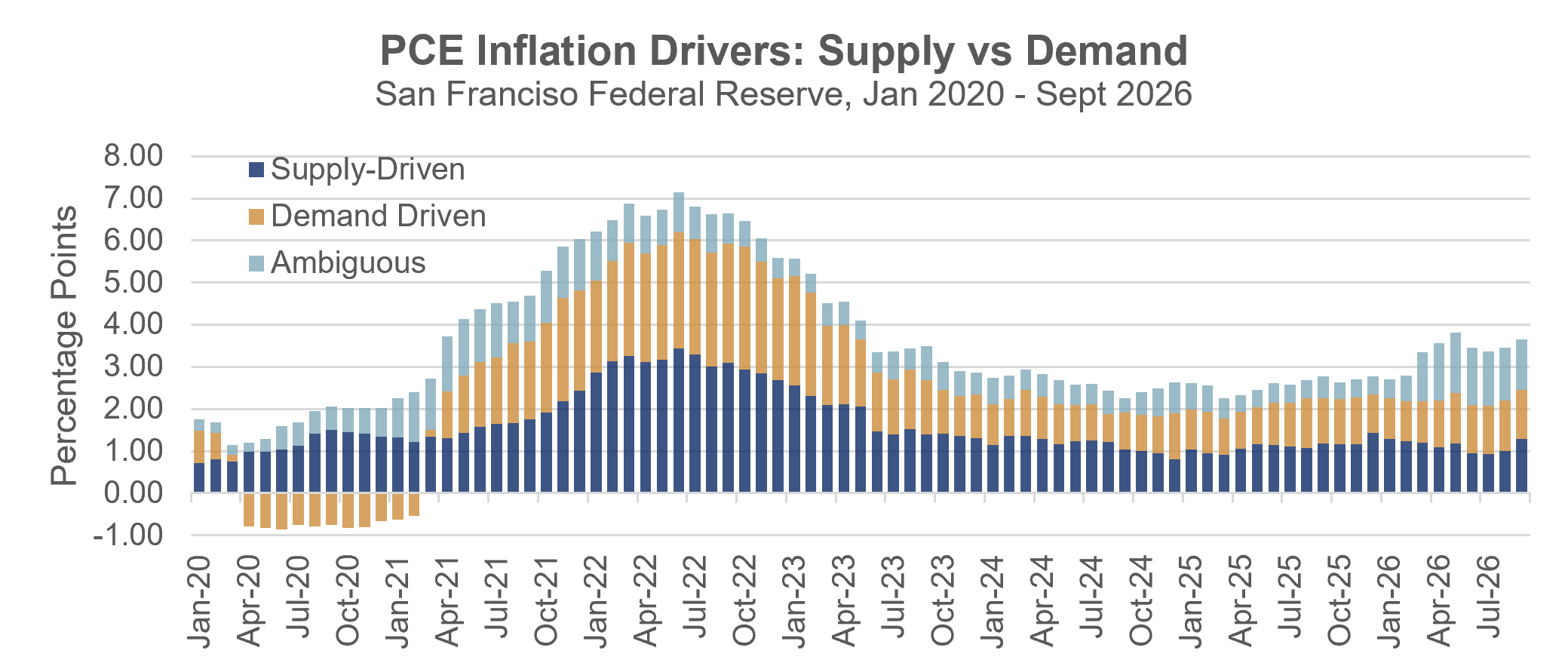
The distinction is especially relevant today. In September, supply-driven inflation contributed 1.28 percentage points to annual PCE inflation, demand-driven factors contributed 1.17 points, and an additional 1.20 points could not be definitively attributed to either source. Only about one-third of overall inflation was clearly demand-driven.
Our concern is the potential economic cost of pursuing an inflexible inflation objective when much of the inflation originates outside monetary policy’s direct influence. If supply-related inflation remains elevated, achieving the Fed’s 2% target may require greater restraint on economic demand, potentially at the expense of employment and economic growth.
Read More
The Challenge of Controlling Supply-Driven Inflation
The Federal Reserve’s principal monetary policy tool is the federal funds rate. Higher interest rates influence inflation primarily by restraining borrowing, investment, and consumer demand. They cannot directly increase oil production, repair disrupted supply chains, or eliminate tariffs.
Research from the San Francisco Fed highlights this limitation. Its findings suggest that demand-driven inflation responds meaningfully to tighter monetary policy, while supply-driven inflation exhibits no statistically reliable response. This distinction matters because approximately one-third of September’s annual PCE inflation was classified as supply-driven, with another third attributable to factors whose origins could not be clearly identified.
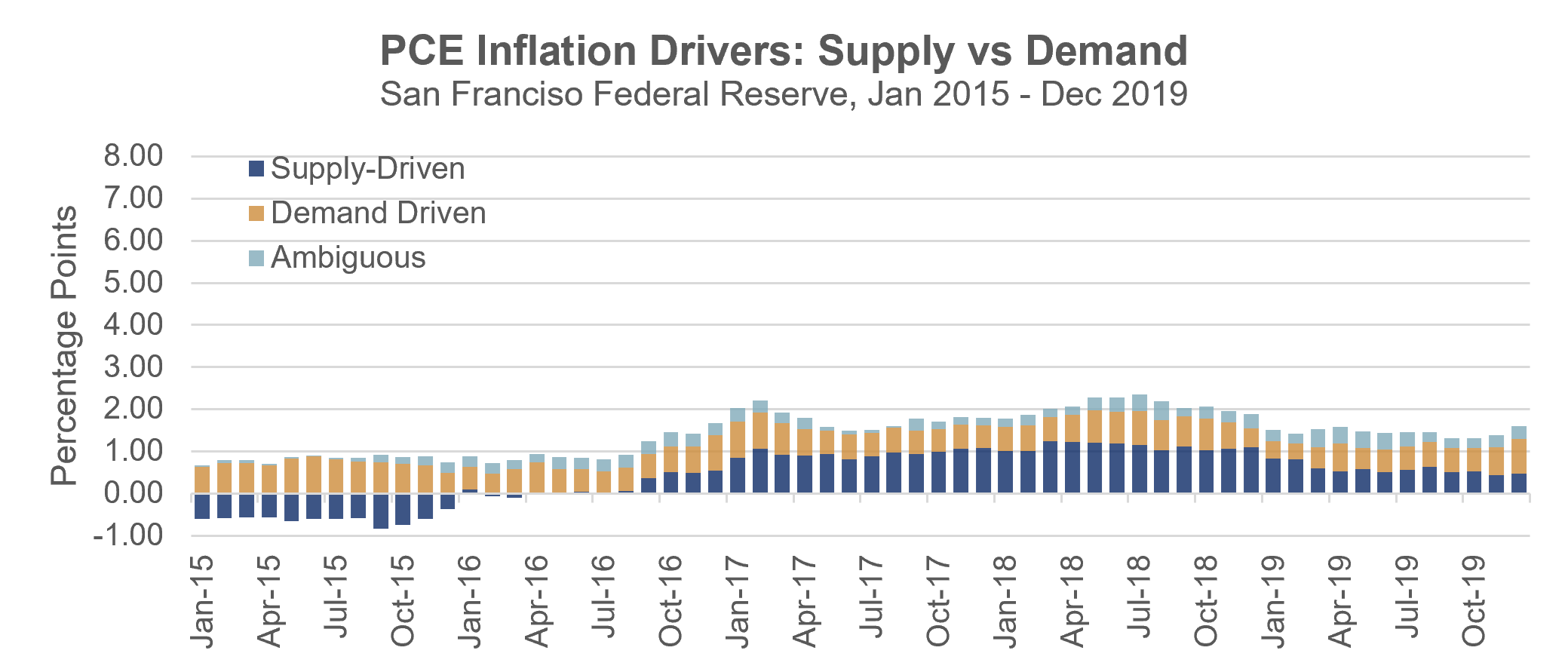
History illustrates that supply conditions can influence inflation independently of monetary policy. Between 2015 and 2019, inflation remained persistently below the Fed’s 2% objective despite exceptionally accommodative interest rates. Favorable supply conditions helped restrain inflation during that period. Today, the concern is the reverse: adverse supply developments may sustain inflation even as tighter monetary policy weighs on economic activity.
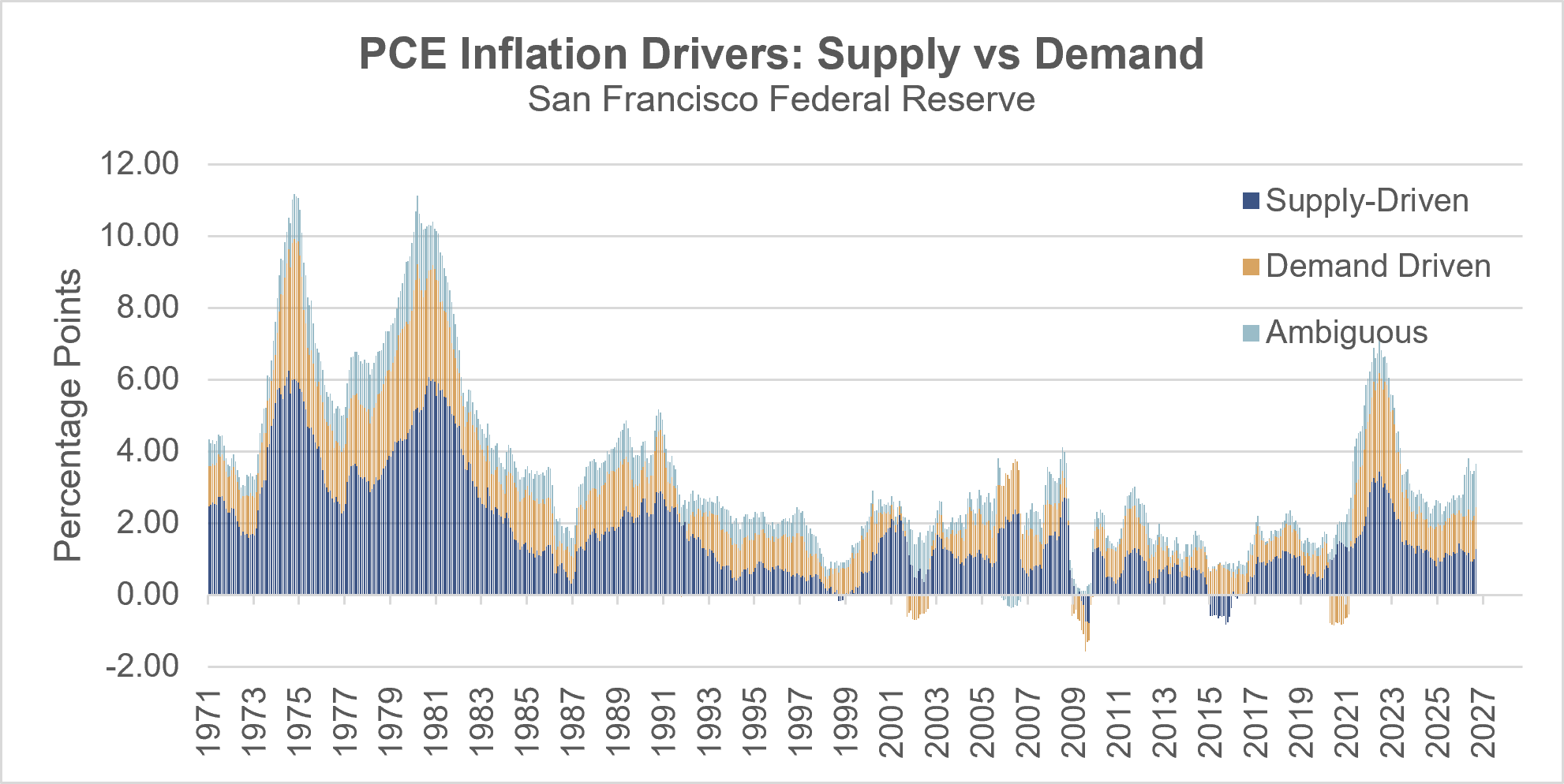
Chair Warsh has been unequivocal in his commitment to restoring 2% PCE inflation. The challenge is that the Fed’s responsibility for achieving its objective may exceed its ability to directly influence all the factors contributing to inflation.
Monetary policy can still reduce overall inflation by restraining demand, even when supply-driven price pressures persist. But achieving that result may require suppressing demand sufficiently to offset price increases originating elsewhere in the economy.
There are legitimate reasons to respond to supply shocks, particularly when persistent price pressures threaten inflation expectations or generate broader wage and pricing adjustments. Nevertheless, the distinction between controlling inflation and controlling its underlying causes is economically consequential.
The policy risk is that achieving the inflation target could require increasingly restrictive monetary conditions, imposing economic costs disproportionate to the inflationary pressures monetary policy can directly address.
Sources
Federal Reserve Bank of San Francisco research on supply- and demand-driven PCE inflation.
Personal Consumption Expenditures (PCE) inflation data.
Personal Consumption Expenditures (PCE) inflation data.
Institutional plan sponsor use only. This material is provided for informational purposes and should not be considered investment, tax, or legal advice.

 Comperio Retirement Consulting has been named one of the largest 100 Investment Consultants in the United States according to Pension & Investments (P&I) for the past 8 years