
Inflation: Less Heat, More Breadth
2. Inflation is more widespread
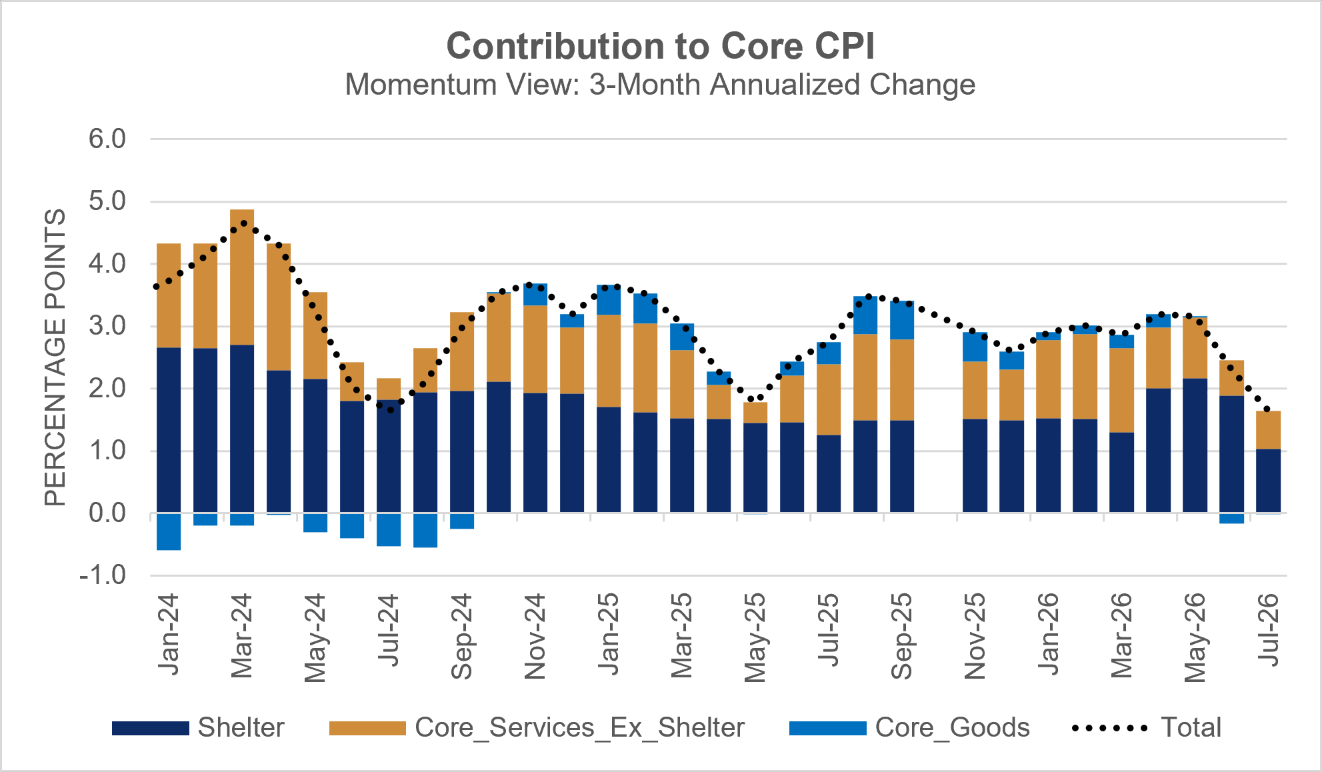
The inflation debate has become increasingly binary: inflation is either reaccelerating and requires additional Federal Reserve tightening, or it is steadily returning toward the Fed’s 2% target. The underlying data suggest a more complicated picture. Our decomposition of CPI into monthly “impulse,” three-month annualized “momentum,” and year-over-year “regime” measures shows that the magnitude of inflation has recently weakened, particularly in Core CPI. Three-month annualized Core inflation has fallen sharply, and the latest monthly readings show relatively little broad-based upward pressure outside of Shelter and selected services. In fact, contributions from Shelter halved (2.2% → 1.0%), Core Services ex-Shelter dropped by third (0.9% → 0.6%), and Core Goods fell to roughly zero.
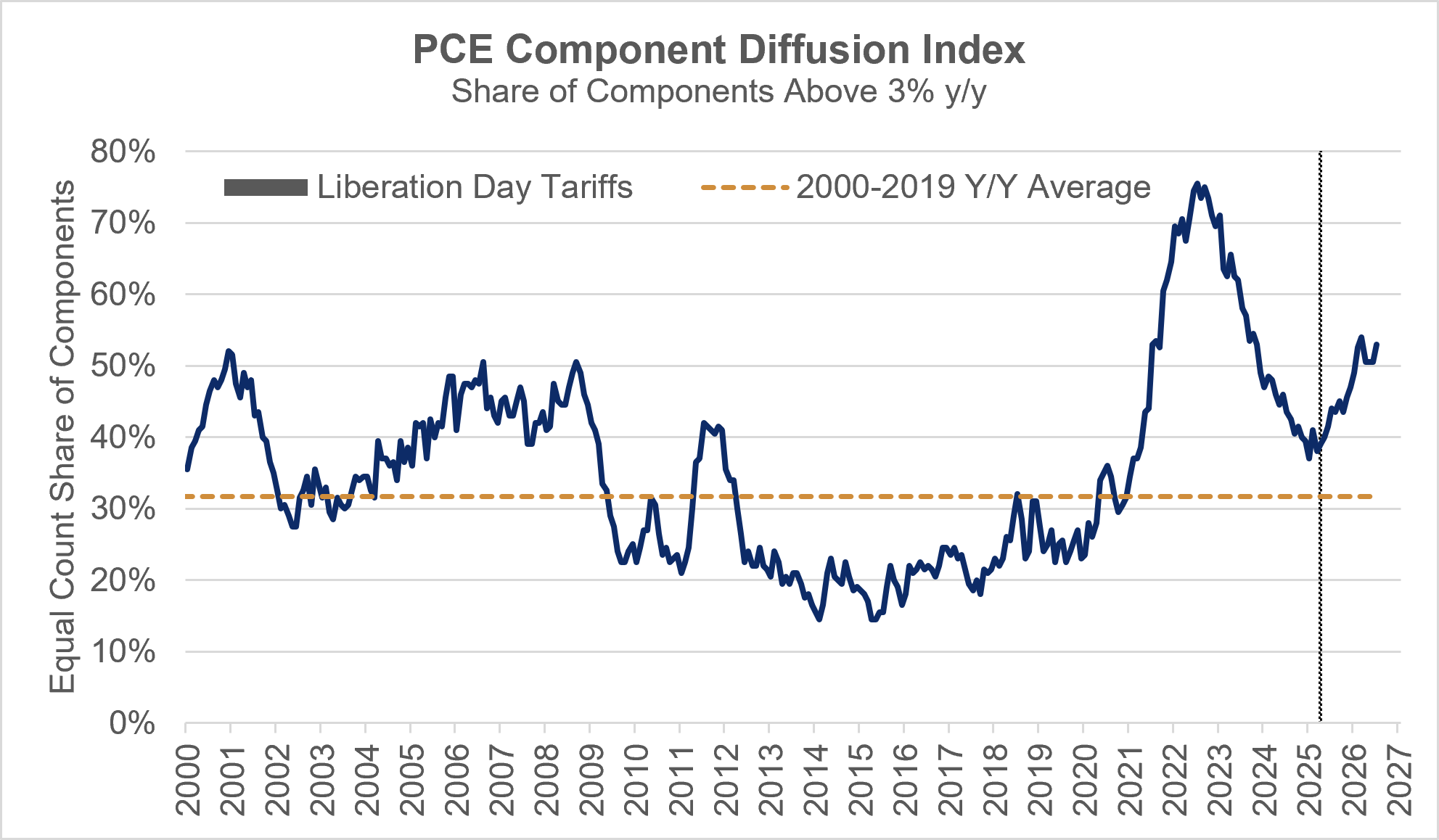
At the same time, inflation appears to be broadening rather than disappearing. Following Federal Reserve Chairman Kevin Warsh’s Jackson Hole remarks, we replicated his analysis of the individual components of the PCE Price Index. Warsh noted that 54% of PCE components increased more than 3% over the past year, compared with an average of roughly 32% during the two decades preceding the pandemic. Our calculation shows a similar pattern—and, notably, the share began rising again around the time of the April 2025 tariff announcements. That does not establish tariffs as the cause, but the timing is difficult to ignore. The result is an unusual combination: less inflationary intensity, but greater inflationary diffusion.
This distinction helps put the recent hawkish Federal Reserve narrative into perspective. Warsh is correct that inflation remains above target and that its breadth deserves attention. But the incoming CPI data thus far provide limited evidence of a new, self-reinforcing inflation cycle. Energy contributed heavily to the spring acceleration in headline inflation before reversing, while core-goods pressures have remained relatively contained. Core inflation momentum has recently moved toward the historical range that was associated with roughly 2% PCE inflation prior to the pandemic. In our view, that argues for vigilance, but not for assuming that another rate-hiking cycle is already warranted.
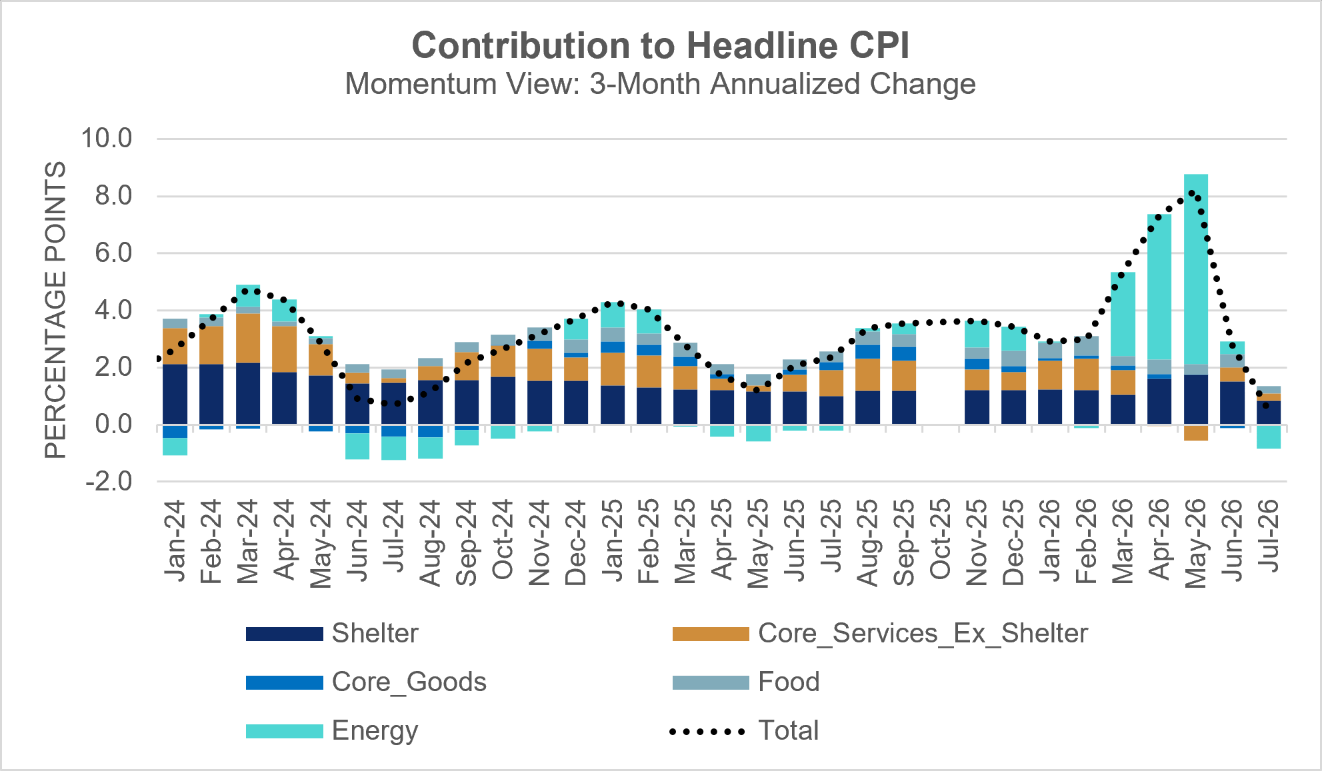
The initial chart depicted Core CPI momentum, the CPI series that strips out the volatility categories of food and energy. While this gauge is a better estimate of underlying inflation pressure, Headline CPI is important in estimating the actual impact inflation is having on consumers. The energy surge in March-May is quite apparent, as is the rapid reversal in June-July. The events in the Gulf remain unpredictable.
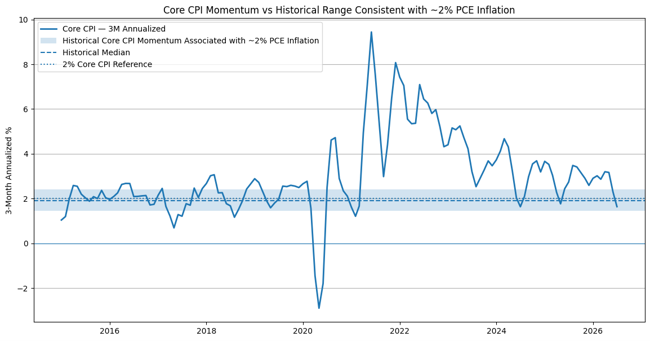 Ultimately, what we want to know is “How unusual is today’s inflation momentum relative to periods when the Fed was successfully achieving approximately 2% PCE inflation?” The next chart shows the current reading is essentially back in that historical neighborhood. That doesn’t prove inflation will converge to 2%. But it makes the assertion that today’s data obviously require imminent hikes substantially harder to defend.
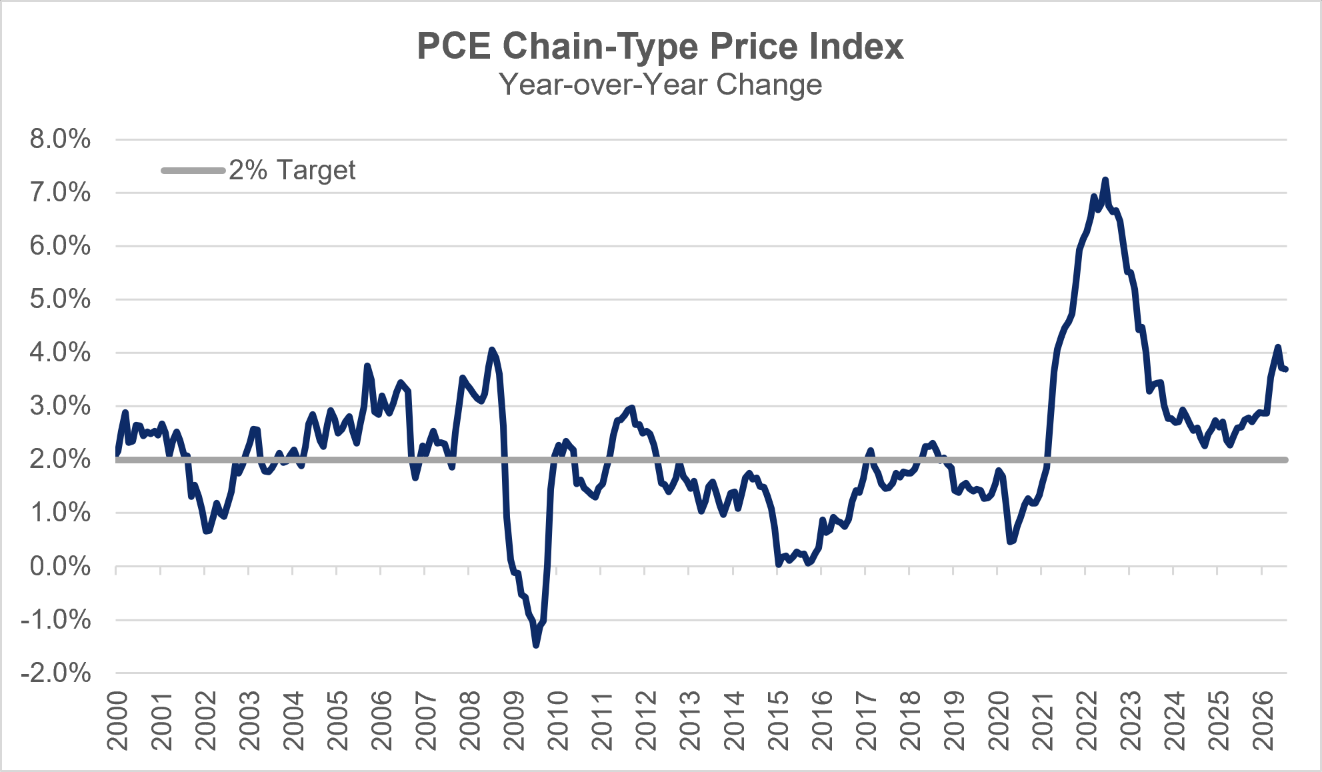 There is also a broader monetary-policy question. Before COVID, the Federal Reserve spent much of the prior decade struggling to push inflation up to its 2% objective. Since COVID, it has struggled to bring inflation down to that same objective. That experience should at least raise questions about how precisely short-term interest rates control inflation in the modern economy.
Warsh has commissioned several task forces to reconsider aspects of the Fed’s policy framework, although he explicitly stated at Jackson Hole that their eventual recommendations will not determine near-term policy decisions. His emphasis on studying the structure of the economy while reducing reliance on forward guidance nevertheless seems appropriate given how much uncertainty surrounds both the inflation process and the transmission of monetary policy.

 Comperio Retirement Consulting has been named one of the largest 100 Investment Consultants in the United States according to Pension & Investments (P&I) for the past 8 years